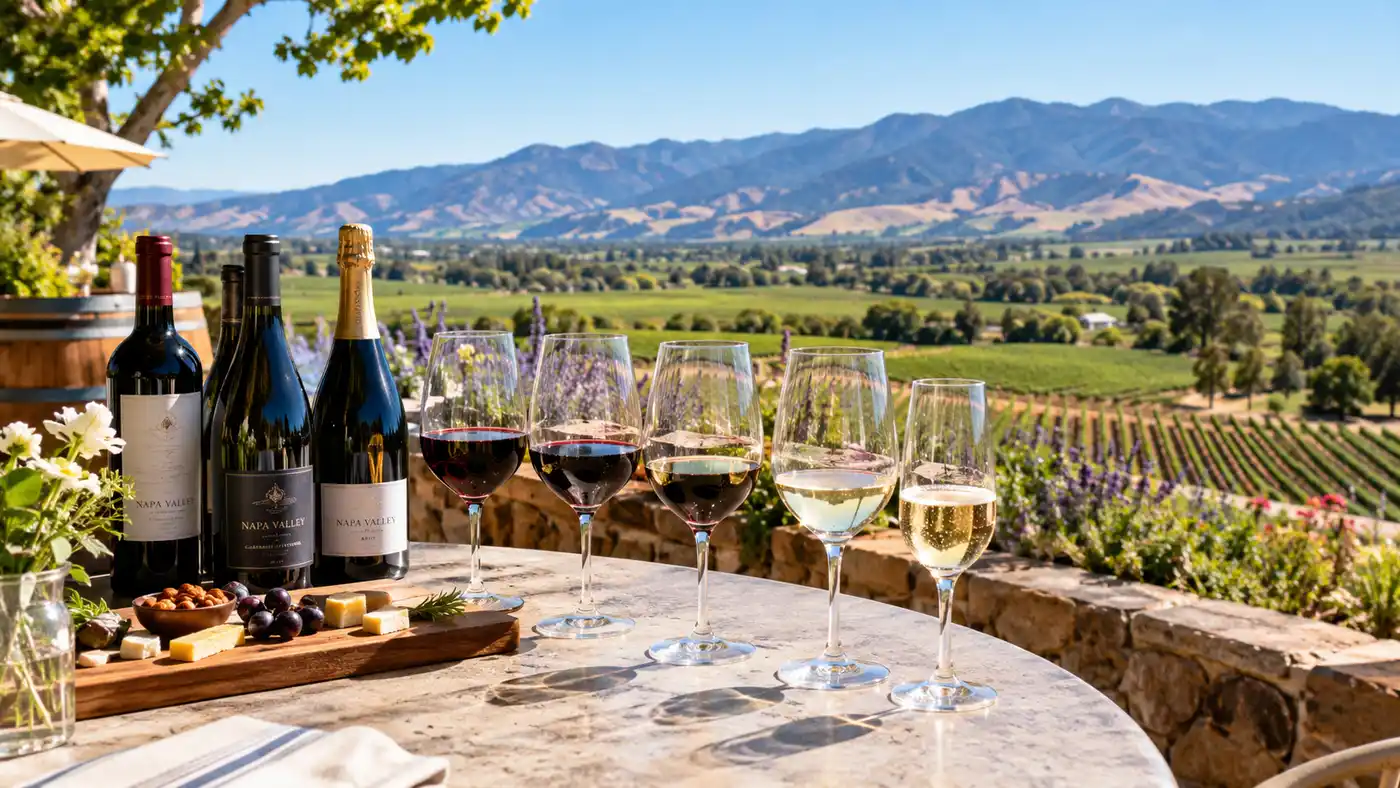
Wines Napa Valley Is Known For: Cabernet to Sparkling
Drive up Highway 29 on an October morning and you will smell it before you see it. Fermenting grapes give off a warm, yeasty aroma that hangs thick between the Mayacamas and Vaca ranges. People travel from all over the planet just to sip the world-famous wines napa valley is known for, yet plenty of first-time visitors arrive assuming this 30-mile strip of dirt produces only heavy red wine. That is an easy mistake to make when Cabernet commands $200 a bottle at every corner turn.
The truth is far more interesting. Napa Valley packs roughly 33 different soil series and several microclimates into a sliver of land that takes barely 45 minutes to drive end-to-end without traffic. The chilly, wind-whipped Carneros flats near the bay sit just miles away from the baking volcanic terraces of Calistoga. Because of that geography, Napa crafts world-class expressions of grapes ranging from bone-dry sparkling wine to tropical, buttery whites and brooding mountain reds.
Book your napa valley wine tasting experience:
Cabernet Sauvignon: The Crown Jewel of Napa Valley
Cabernet Sauvignon pays the mortgages around here. It accounts for more than 50% of the vineyard acreage in Napa County and easily represents the best red wine in napa valley by reputation and auction price. The grape settled into the valley during the late 1800s, but the 1976 Judgment of Paris blind tasting turned Napa Cabernet vineyards into global legends almost overnight. When a bottle of 1973 Stag's Leap Wine Cellars S.L.V. bested top Bordeaux chateaux, the valley changed forever.
You cannot talk about Cabernet without talking about the benchlands. The valley floor divides into distinct pockets. Oakville and Rutherford give you black currant, cedar, and that famous dusty mineral finish locals simply call "Rutherford Dust." Move south to Stags Leap District and the tannins turn velvety and floral. Head up the steep gravel roads into Howell Mountain or Mount Veeder, and the wines become ink-dark, tight, and structured enough to rest in a cellar for 25 years. If you are scouting the best napa wineries for cabernet sauvignon, you will find places like Silver Oak, Corison, and Heitz Cellar offering wildly different interpretations of the exact same grape.
Pro tip: Mountain Cabernets from Howell Mountain or Spring Mountain carry far more aggressive tannins than valley-floor bottles. If you taste young mountain fruit, ask the pourer if they have a vintage with at least 5 years of cellar age open behind the counter.
Big wineries in napa often lean toward a lush, oak-forward style with intense vanilla and mocha notes. Smaller family outfits sometimes pick earlier, preserving acidity and herbal nuances that evoke classic European cellars. Both approaches have merit. It really comes down to whether you prefer a glass that knocks you back with ripe fruit or one that unfurls slowly over a long dinner.
Chardonnay and Pinot Noir: The Cool-Climate Wonders of Carneros
People forget that Napa does white wine with equal mastery. While the northern reaches bake in 95-degree afternoon heat, southern Napa shivers under coastal marine layers. Down in Carneros, morning fog rolls directly off San Pablo Bay, keeping temperatures 12 to 15 degrees cooler than St. Helena. This natural air conditioner creates the ideal sanctuary for Pinot Noir and Chardonnay, two grapes that wither if they spend their days in blistering heat.
Chardonnay put California on the modern fine-wine map when Chateau Montelena won the white competition in Paris back in 1976. Modern napa valley chardonnay wineries showcase a wide spectrum. You can sip rich, golden wines barrel-fermented in new French oak at Far Niente, or lean, mineral-driven styles finished entirely in stainless steel or concrete eggs. When you want the best white wine in napa, Carneros and cooler pockets of Oak Knoll are where you look. For an overview of how these distinct pockets differ, take a look at our Napa Valley subregions guide before mapping out your driving route.
Pinot Noir here surprises people who associate California reds strictly with monster body. The best pinot noir in napa smells of tart red cherries, damp forest floor, and wild thyme. It feels weightless compared to Cabernet, yet it lingers on your tongue for minutes. Wineries like Domaine Carneros, Saintsbury, and Truchard have spent decades dialing in clone selections across these rolling hills to capture that breezy elegance.
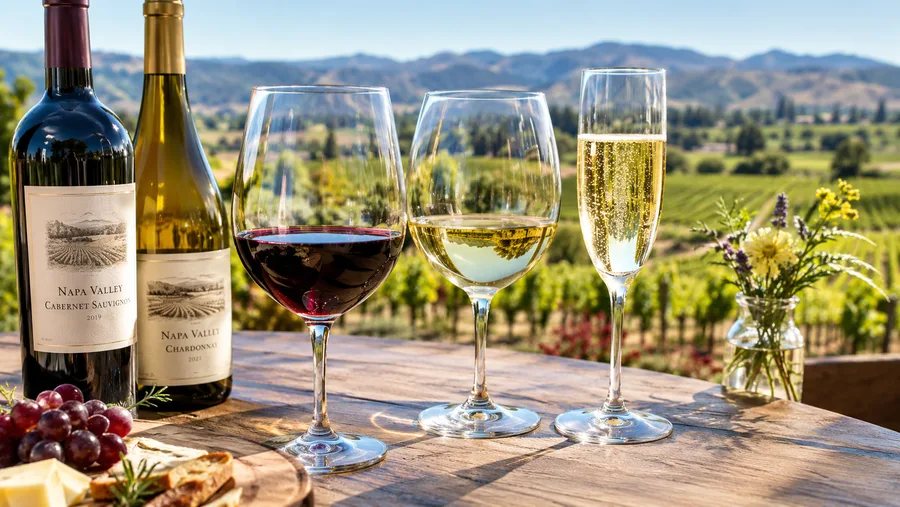
Sparkling Wine: Old-World Tradition in the California Sun
Champagne is a protected French region, of course, so locals call it sparkling wine. Yet the ties between France and Napa bubbles are deep and personal. In the late 1970s and 1980s, storied French Champagne houses recognized the potential of the cool Carneros corridor and bought up land. Moet & Chandon launched Domaine Chandon, Taittinger built the grand French-style chateau at Domaine Carneros, and Mumm opened their sprawling Rutherford outpost.
Schramsberg Vineyards in Calistoga started making traditional method bubbles even earlier, back in 1965. Jack and Jamie Davies revived an 1862 estate, dug miles of aging caves directly into the soft volcanic hills, and produced sparkling wine that ended up served at the historic 1972 "Toast to Peace" in Beijing between Richard Nixon and Zhou Enlai. A cave tour there feels like stepping backward into nineteenth-century France, cobwebs and all.
Note: Most sparkling wineries in Napa require reservations for patio tastings, and slots book up weeks ahead during harvest season. Walk-in bubble bars are rare along Highway 29.
A champagne napa tasting hits differently than a standard tasting flight. Tasting bubbles outdoors while overlooking the Carneros hills cleanses your palate, especially after two days of heavy Cabernet tannin. Most sparkling wine wineries in napa focus on blends of Chardonnay and Pinot Noir, aging them on dead yeast cells (lees) anywhere from 2 to 9 years to build rich brioche and toasted almond complexities.
Book your napa valley wine tasting experience:
The Underrated Varieties: Sauvignon Blanc, Merlot, and Zinfandel
Cabernet steals the spotlight, but Napa makes several other wines that deserve your attention. Sauvignon Blanc offers a refreshing, zesty counterpoint on warm afternoons. Some producers barrel-ferment it under the name Fumé Blanc (a style popularized by Robert Mondavi), while others keep it crisp, citrusy, and bright. Spottswoode and Lail Vineyards make some of the most celebrated Sauvignon Blancs in the country, easily rivalling top Bordeaux Blanc.
Merlot suffered an unfair hit to its reputation twenty years ago, but winemakers here never stopped loving it. In soils with heavy clay, Napa Merlot produces opulent, silky wines packed with black plum, cocoa, and soft floral notes. Wineries like Duckhorn built an empire on Merlot, proving it can hold its own alongside any Cabernet on the table.
Then you have Zinfandel, Napa's true heritage grape. Long before Cabernet arrived, Italian and German immigrants planted Zinfandel across the hillsides in the 1870s and 1880s. A handful of those ancient, gnarled, head-trained vineyards still survive today around Calistoga and St. Helena.
- Old-vine Zinfandel: Head to Storybook Mountain or Turley to taste peppery, briary reds picked from vines over 70 years old.
- Crisp Sauvignon Blanc: Visit Frog's Leap or Honig for certified organic whites redolent of fresh lemongrass and lime peel.
- Single-vineyard Merlot: Stop by Duckhorn or Pride Mountain Vineyards for plush reds that demonstrate what proper mountain Merlot tastes like.
- Petite Sirah: Sip dense, purple-hued bottles at historic St. Helena properties where heritage field blends still thrive.
Napa Valley Grapes at a Glance
Choosing where to spend your tasting budget can feel overwhelming when over 400 tasting rooms compete for your calendar. Tasting fees now run anywhere from $40 up to $150 per person, so matching your own palate to the right variety saves both cash and palate fatigue. You can explore some of our favorite spots in our guide to the best wineries in Napa Valley to find estates that excel across each category.
| Wine Style | Primary Napa Regions | Core Tasting Notes | Typical Tasting Fee |
|---|---|---|---|
| Cabernet Sauvignon | Oakville, Rutherford, Howell Mountain | Blackberry, cassis, cedar, dark chocolate | $65 - $125 |
| Chardonnay | Carneros, Oak Knoll District | Bosc pear, green apple, vanilla, toasted brioche | $45 - $75 |
| Pinot Noir | Los Carneros | Red cherry, forest floor, clove, rhubarb | $45 - $70 |
| Traditional Method Sparkling | Carneros, Diamond Mountain | Lemon curd, toasted hazelnut, baked apple, chalk | $50 - $85 |
| Sauvignon Blanc | St. Helena, Rutherford, Yountville | Grapefruit, white peach, cut grass, lime blossom | $35 - $60 |
Keep your tasting schedule sane. Three stops in a day is plenty. Four will leave you exhausted, dehydrated, and unable to tell a $300 reserve bottle from a table red. Plan around geography rather than hype, grouping visits within a single sub-appellation to avoid burning two hours sitting in Highway 29 traffic behind tour buses.
- Morning bubble tasting: Start around 10:30 AM with sparkling wine in Carneros when your palate is clean and sharp.
- Midday picnic or lunch stop: Eat real food in Yountville or St. Helena before tackling high-alcohol reds.
- Afternoon Cabernet tasting: Reserve a mid-afternoon slot at an estate with cave storage or hillside vineyard views.
- Designated driver or driver service: Napa pours generously, and valley police patrol Highway 29 vigorously.
Frequently Asked Questions about wines napa valley is known for
What single wine is Napa Valley most famous for?
Cabernet Sauvignon is Napa's signature grape by a wide margin. It occupies over half of the valley's cultivated vineyard land and earns the highest critical scores, commanding international collector status.
Does Napa make good white wine?
Yes. Carneros and Oak Knoll produce world-class Chardonnay with balanced acidity, while northern pockets like St. Helena and Rutherford craft bright, aromatic Sauvignon Blancs that rival top French whites.
Can you taste real Champagne in Napa Valley?
Technically, true Champagne comes solely from the Champagne region of France. However, French houses like Taittinger and Moet & Chandon own estates in Napa that produce premium traditional method sparkling wines using the exact same grape varieties and aging processes.
Quick Reference
- Dominant red: Cabernet Sauvignon (over 50% of vineyard land)
- Dominant white: Chardonnay (approx. 15% of vineyard land)
- Cool-climate pocket: Los Carneros AVA for Pinot Noir and sparkling
- Average tasting flight: $45 to $85 per person
Book your napa valley wine tasting experience:
The Bottom Line
Napa built its reputation on big, bold Cabernet, and it still wears that crown with good reason. But treat your trip as a wider discovery. Drink crisp bubbles on a Carneros patio while the fog lifts off the eucalyptus trees. Sip an old-vine Zinfandel grown from twisted 80-year-old trunks up near Calistoga. Grab a cold glass of Sauvignon Blanc on an 88-degree afternoon. Once you taste across the full spectrum of microclimates, you realize this valley is far more than a one-grape wonder.
Read more about napa valley wine tasting.